Welcome to MOOS-DAWG 2026 !!
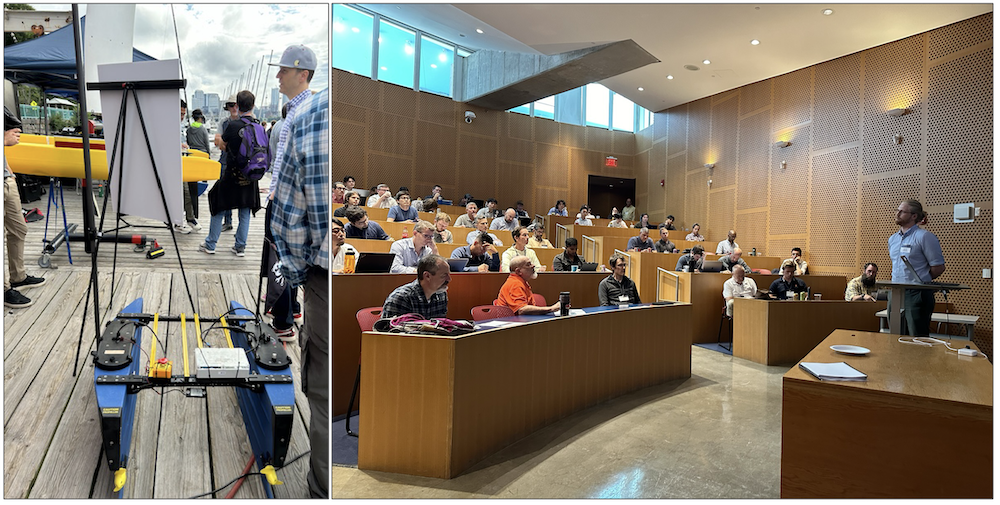
The 2026 Working Group Meeting for MOOS and IvP developers and practitioners will be held in Cambridge Massachusetts, July 29-30 2026, on the campus of the Massachusetts Institute of Technology.
MOOS-DAWG'26 Sponsor:

Demo Day 2026 Participants)
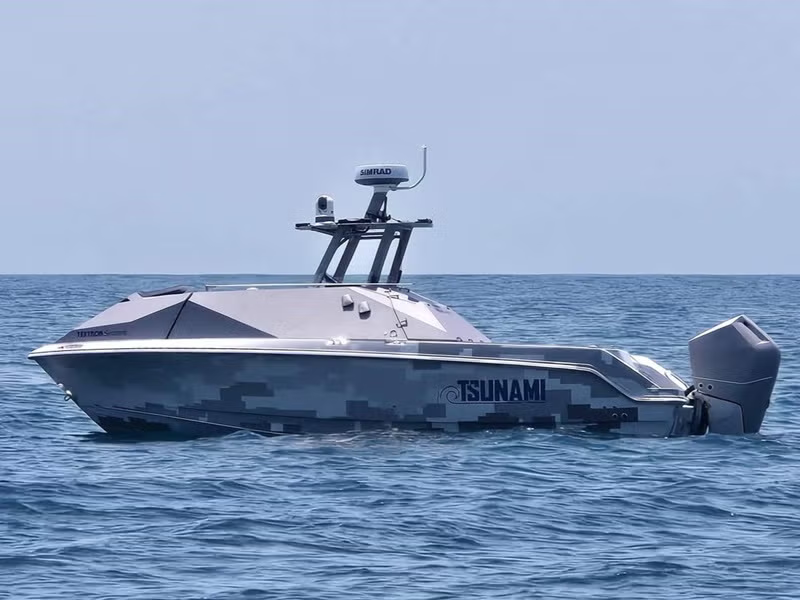 Tsunami USV - Textron Unmanned Systems | The TSUNAMI USV (Uncrewed Surface Vessel) is a family of scalable, low-cost, fully autonomous maritime surface platforms developed jointly by Textron Systems and Brunswick Corporation. Key Features: Mass Production and Commercial Hulls: Built using commercial, high-performance hulls from Brunswick (ranging from 21 ft to 42 ft in length) to allow rapid and affordable manufacturing at scale. Defense-Grade Autonomy: Integrates Textron Systems' mature autonomy control software (derived from its Common Unmanned Surface Vehicle / CUSV programs). |
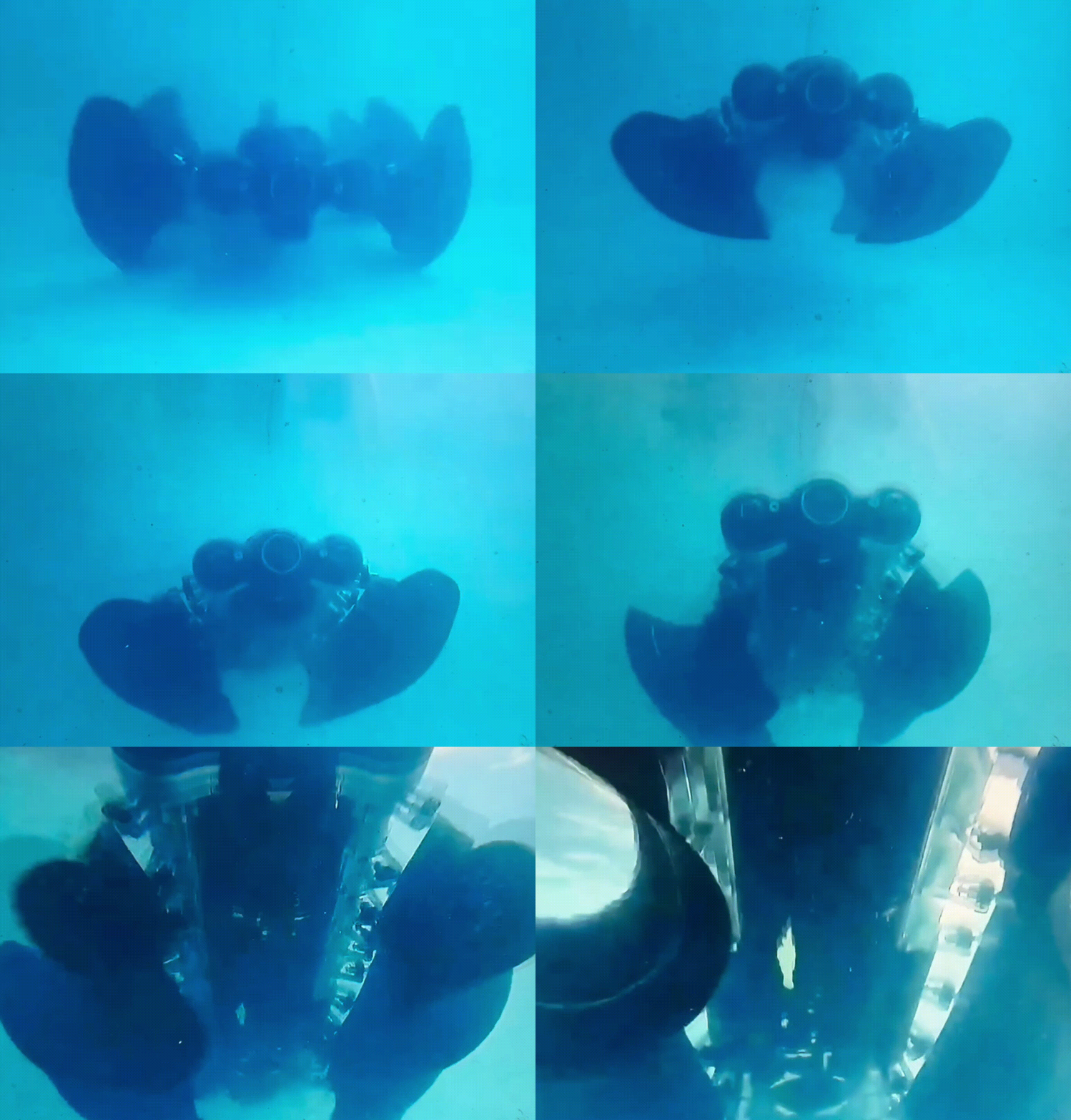 C-Ray Platform - Pliant Energy Systems | C-Ray is a marine robot by Pliant Energy Systems in Brooklyn NY. It deploys with MOOS-IvP and is uniquely effective in surf zones, shallow waters, and cluttered environments using just one pair of undulating fins, a niche that has proven hard to crack for conventional designs. At MOOS-DAWG we'll demo the vehicle live for the first time in this venue and present a new four-fin architecture in development that pushes maneuverability significantly further. NOTE: This vehicle will be demonstrated both on the Charles River during Demo Day, and in an MIT swimming pool on day 1 of the workshop. |
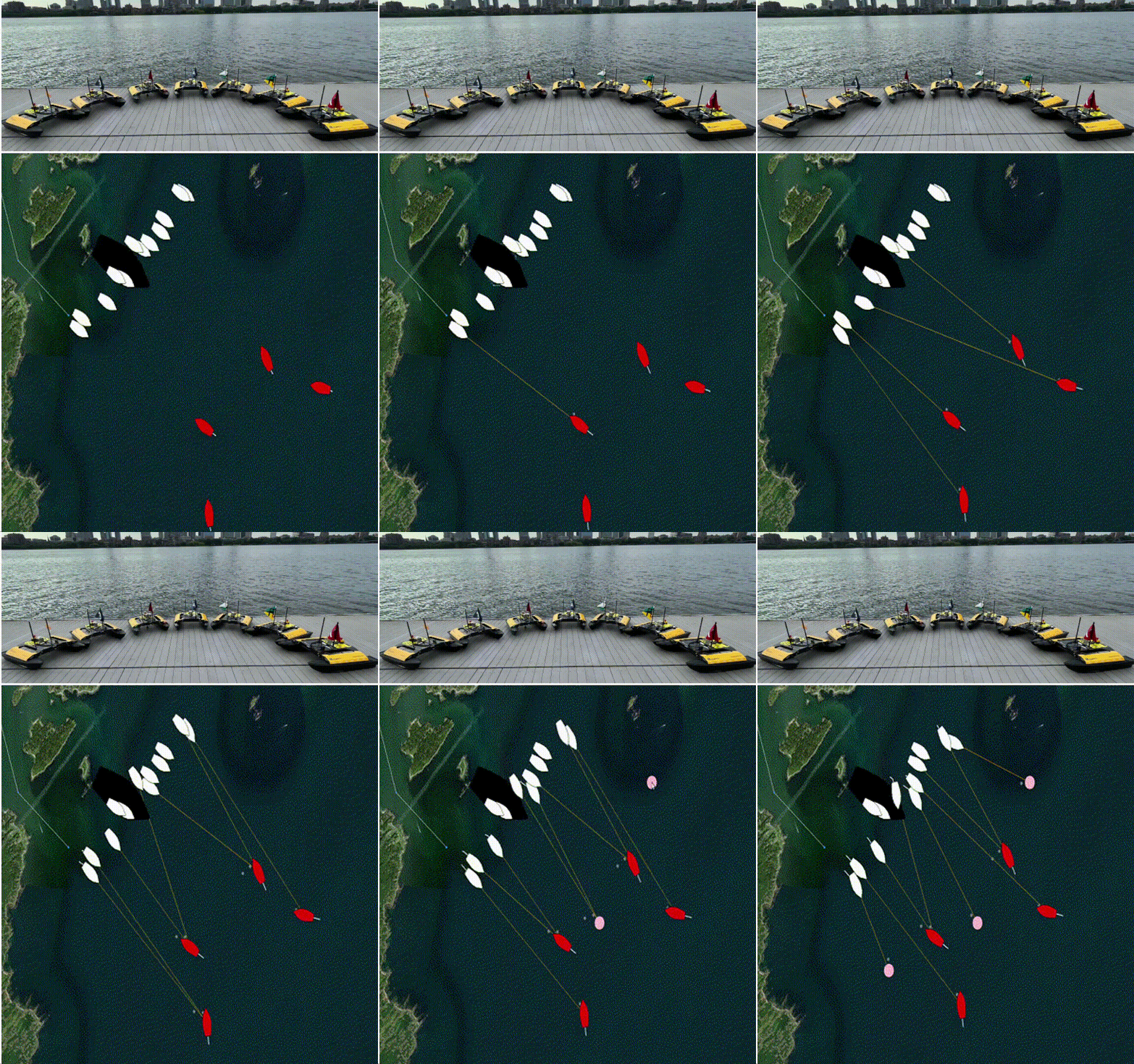 MOOS-IvP-Multi Swarm Capability Set: | The moos-ivp-multi software suite is a collection of modules for distributed and decentralized decision-making in groups. In this demonstration, a group of defenders (white) become active one at a time and are assigned an incoming target (red) using a decentralized algorithm. The assignment is shown by the orange line, and the objective of the algorithm is to minimize the sum of the lengths of all orange lines. Additional possible target locations are selected by an operator via a mouse click and appear as pink circles. The group of defenders also allocates teammates to intercept these new target locations. |
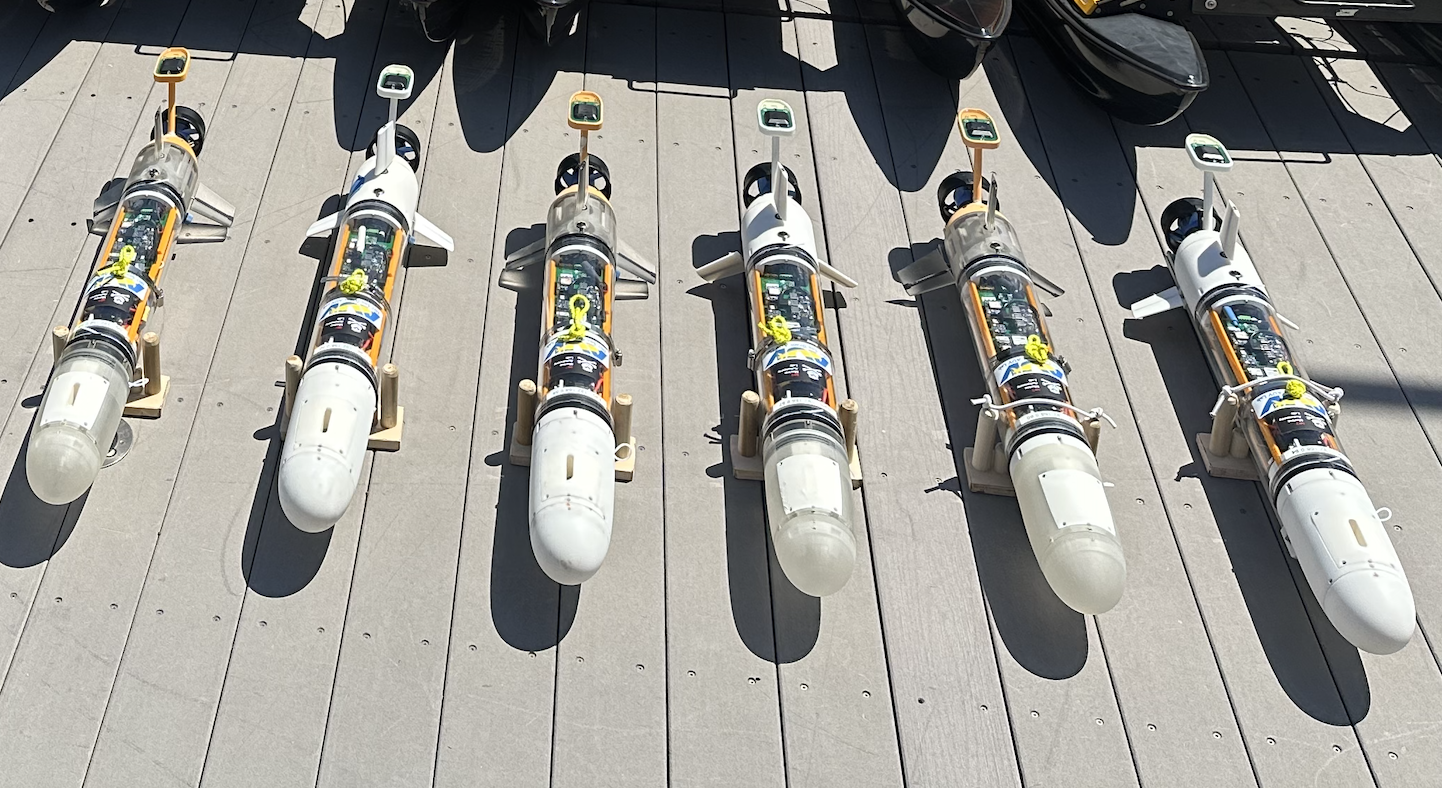 The SeaBeaver III Autonomous Underwater Vehicle | MIT Sea Beaver III: The Sea Beaver II (SB3) Autonomous Underwater Vehicle was developed in the Spring of 2024 in the AUV Lab, part of the MIT Sea Grant College, by Supun Randeni and Michael Sacarny. Development was funded primarily by the MIT Dept of Mechanical Engineering to support the new undergrad course, 2.S01 Intro to Autonomous Underwater Vehicles, piloted in the Spring of 2024. Seven SB2 platforms were built for the class and many more AUVs have been built since then. The platforms are a custom MIT AUV Lab design, constructed with commercially available parts and 3D printed materials on campus. The AUVs also contain two MIT custom printed circuited boards. Total equipment costs were less than $3000 per unit. |
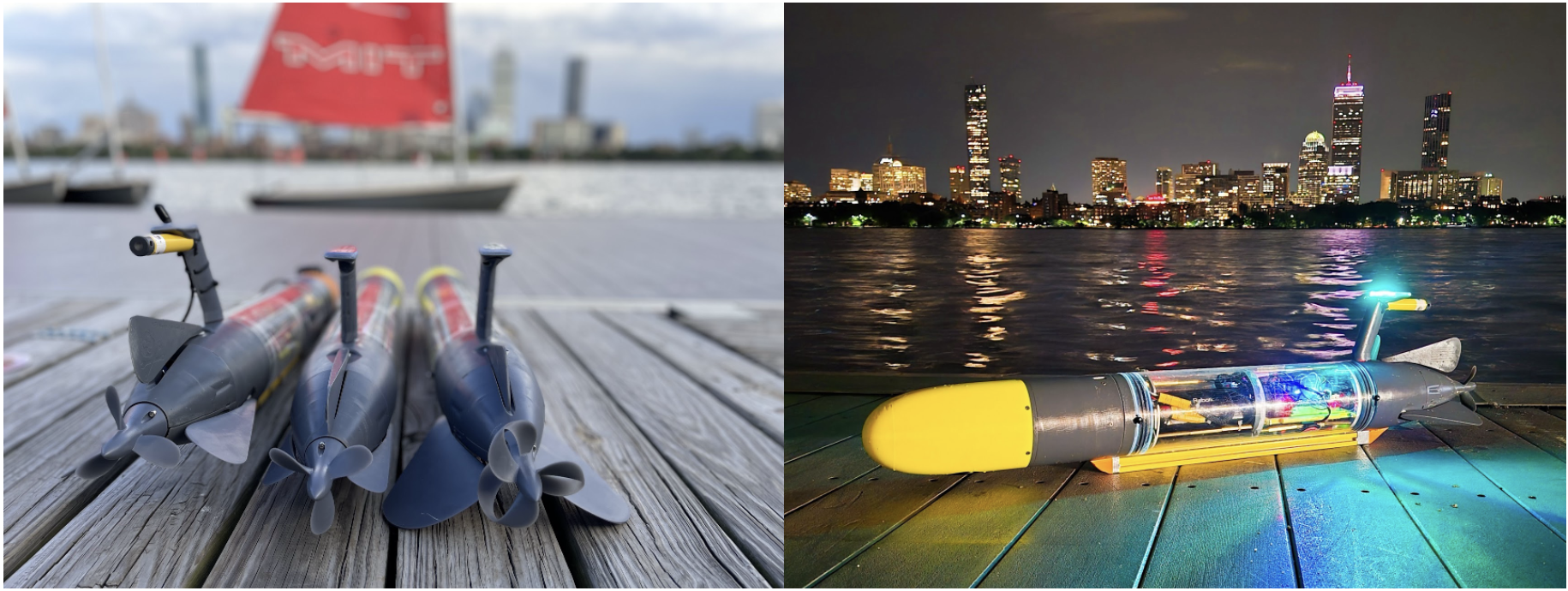 The Spurdog Autonomous Underwater Vehicle | The MIT Spurdog Autonomous Underwater Vehicle: The Spurdog AUV was developed in 2023/24 at the MIT Department of Mechanical Engineering and the MIT Marine Autonomy Lab. The Objective of the Spurdog is to develop a low-cost and open-sourced Autonomous Underwater Vehicle (AUV) which is available for graduate students and academic research. Develop a highly reliable platform which can be quickly adapted to a variety of applications, be simple to reproduce, with low-labor costs, and develop a broad community with wide-ranging and complementary interests. |
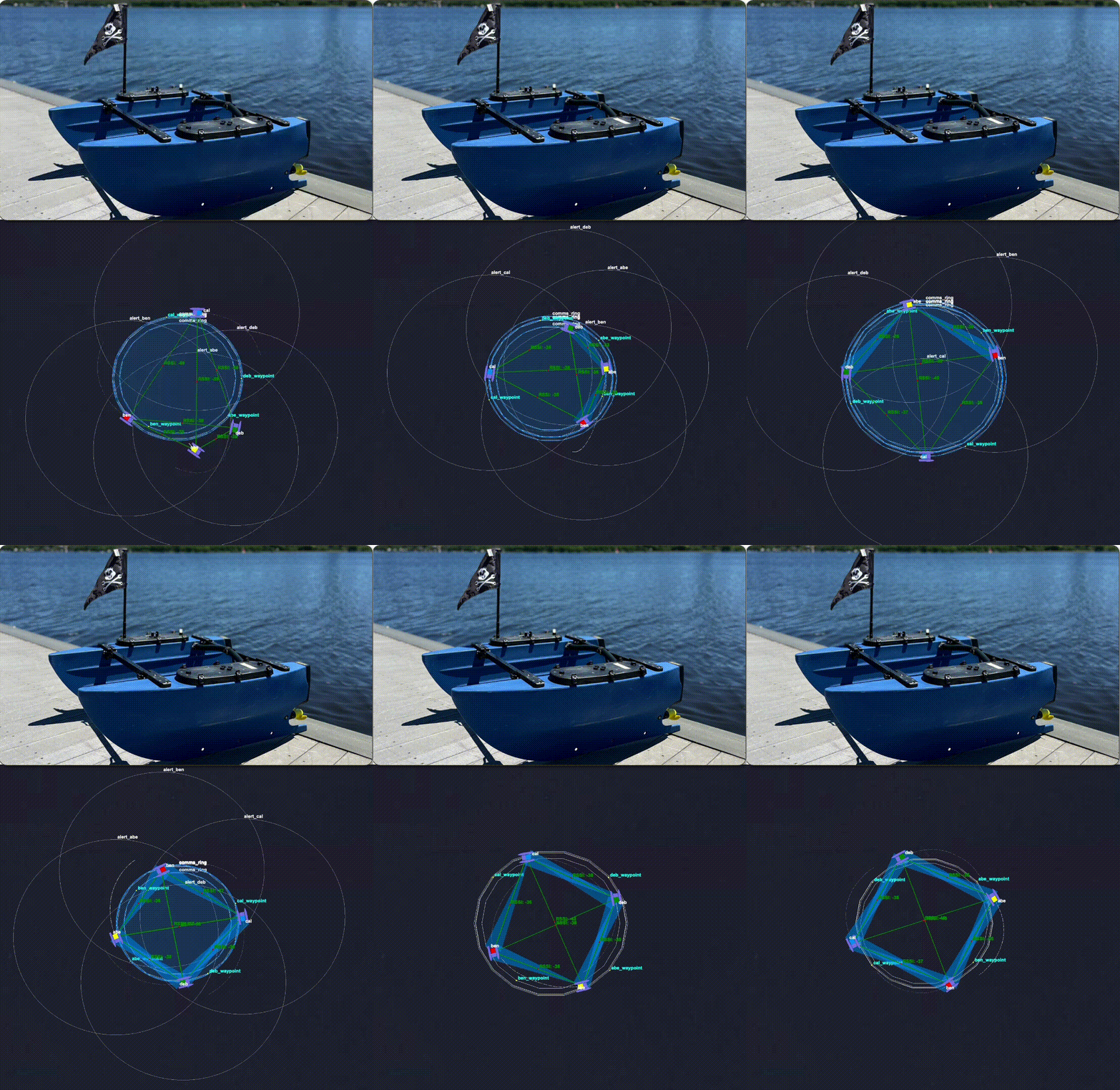 BlueBoat: The Marine Autonomy Lab’s Augmentations for Research and Education | The Blue Robotics BlueBoat USV is a commercially available cost-effective USV from Blue Robotics. Structurally, the vehicle consists of two rotomolded hulls secured by a foldable aluminum frame. Within each hull there is ample room for battery and payload storage as well as easy access to the electronics. Beginning in Summer ‘24 members of the MIT Marine Autonomy Lab in conjunction with the MIT Lincoln Laboratory have worked to integrate MOOS-IvP with the BlueOS software stack via a publicly available BlueOS extension. They have also designed a payload interface kit that allows the easy deployment of a variety of sensors and packages. These efforts result in a widely accessible platform that can support robotics and marine research for the long term. |
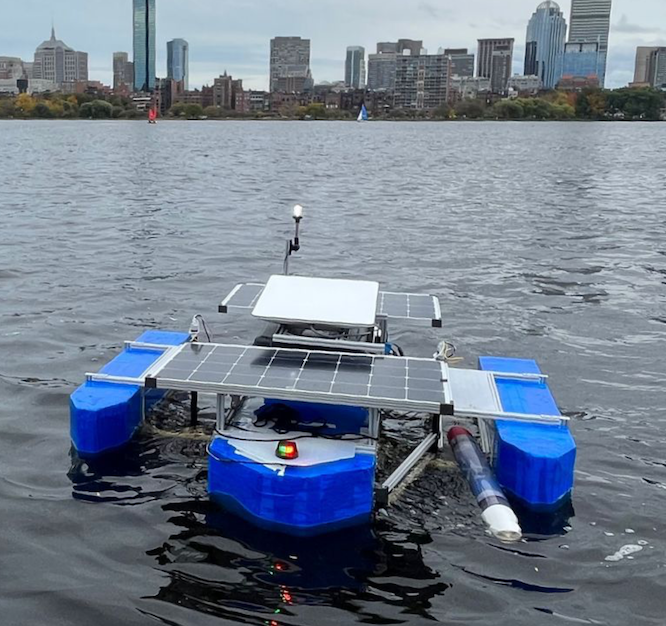 PEARL | PEARL: Platform for Expanding AUV Exploration to Longer Ranges, is an autonomous, solar-powered USV docking platform developed at MIT to support long-duration ocean operations. As a floating base for robotic systems, PEARL supports offshore sensing, vehicle docking, communications, and future multi-robot missions. PEARL also leverages the new generation of Low Earth Orbit (LEO) satellite constellations, such as Iridium and Globalstar, with uplink speeds of 10-30 Mbps and downlink speeds exceeding 100 Mbps. Real-time high-speed internet anywhere on the ocean via space is a potential game changer for maritime operations on and under the water. |
MOOS-DAWG Workshop Format: The meeting consists of single-track discussions on:
- Fielded autonomous platforms using MOOS and/or MOOS-IvP.
- Development of MOOS-based software applications.
- Panel discussions on best-practices and roadmaps for improvement.
Some Workshop topic areas:
- MOOS middleware: Issues related to MOOSDB performance and the interface of MOOS applications.
- IvP Helm: Application experiences, behavior development.
- Payload (backseat driver) interface: standards, best practices, source code availability.
- Acoustic communications: Applications for interfacing with acoustic modems and defining and handling message sets.
- MOOS on low-powered CPUs: Experiences in porting MOOS to the Gumstix, ARM9, or similar processor families.
- Mission planning / Mission configuration: Tools for composing, visualizing or automated error checking of mission (or helm behavior) configuration files.
- Simulation: Includes simulation of the platform, inter-node communications, and models of the ocean or environment.
- Quality Control: Issues related to process of adopting and accepting testing new software releases.
- MOOS/MOOS-IvP build system: Issues related to maintaining a build system for third-party software using MOOS or MOOS-IvP trees.
- Mission monitoring: Tools for rendering vehicle operations and tools for scoping on the MOOSDB.
- Post mission analysis: Tools for parsing, editing and analyzing mission log files.